Your Customers Can Smell the AI
Your customers can smell the AI

A woman I spoke to a few months back got a reply from a client she'd had for years. It said, "Hey, are you okay? These emails don't sound like you anymore. I nearly unsubscribed last week and I felt bad about it."
She's run her business about eight years and she's genuinely good at what she does. She'd also done every single thing the internet told her to do. One tool writing her social posts. Another turning them into videos with a cloned copy of her voice reading them out. Emails writing and sending themselves on a timer. A chat box answering the enquiries coming in through her website. On paper she'd built the dream, the business that runs itself.
Except her numbers were going backwards. Engagement drying up, email opens cut in half inside six months, enquiries slowing right down. And she couldn't work out why, because she was putting out more content than she ever had in her life.
Her own people couldn't find her in her own business anymore. And they noticed before she did.
I have to be honest with you about this one. I'm an AI person, it's what I do for a living, and some of what she built, she built because people like me told her to. That's uncomfortable to sit with. So I'm going to tell you something that sounds strange coming from someone who sells AI. A lot of you need to be using less of it, not more, in the places that actually matter.
What actually changed
Two years ago, if you asked a room of everyday people how they felt about AI, about half of them were excited. Now it's closer to one in five, and more than half say they're flat out sick of seeing it in everything. Nobody announced that shift. It happened while we were all busy playing with the tools.
For about two years the whole online business world has been selling one dream. Let the machines do everything, take yourself out of it, sit back while the business runs. Plenty of people bought it. Me included, up to a point.
But when everyone grabs the same few tools and lets them write everything, it all starts to sound the same. There's a name for it now. People call it AI slop, which just means content that looks fine and reads fine and says absolutely nothing. You've seen it. The post you get to the end of without learning or feeling a single thing. The email that's obviously a template with your first name stuck on the top.
And regular people have developed an eye for it. They notice when the writing is a bit too smooth and too perfect. When the mouth in a video doesn't quite line up with the words. When a caption was clearly written by someone who's never done the job. That drop from half the room down to one in five didn't happen because people decided AI doesn't work. It happened because they're worn out from being sold to by machines all day.
To be fair, this doesn't mean every customer is sitting there working out whether a robot wrote your email. Loads of them neither know nor care, and I'm not going to pretend otherwise. But the ones most likely to notice are your long term customers, the loyal ones, because they actually know you. They can tell the second you stop showing up as yourself.
The two halves of your business
Picture your business in two halves. There's the behind the scenes half, all the stuff your customer never sees. And there's the front half, where your customer actually meets you and gets a feel for who you are.
AI belongs behind the scenes, and honestly that's where most of you should be using far more of it, not less. Sorting enquiries so the right follow up goes to the right person. Letting people book a call without the back and forth about times. Chasing the quote you sent three weeks ago that went nowhere. Turning one long video into a week of short posts, plus the research and the rough drafts and all the admin nobody ever thanks you for. Nobody picked you because your booking link works nicely, so let the machines take as much of that as they can carry. That's where AI hands you back ten or fifteen hours a week.
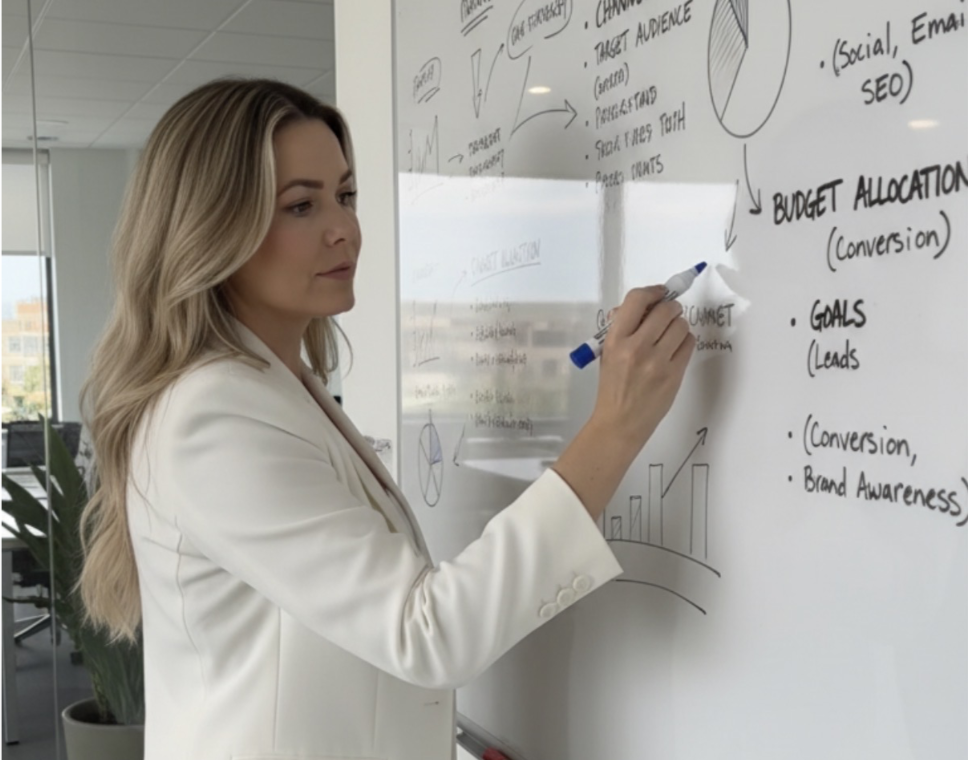
Two halves. One of them AI can have. The other one is the reason people picked you.
The front half has to stay you. Your actual voice in the things you put out. The story only you can tell because you lived it. The message back to a customer who's upset or nervous or not sure yet. The video where someone looks at you and decides whether they trust you.
Because when you run a business like yours, you are the thing they're buying. Hand that part to a machine and you haven't made the business smoother, you've removed the reason people came to you in the first place.
And it doesn't show up straight away, which is what makes it so dangerous. It creeps. Fewer people open your emails. A message that used to come in every week just stops. Then one day your longest standing client tells you she nearly unsubscribed and felt guilty about it.
Most business owners I look at have this backwards. Not enough AI on the invisible jobs, and far too much of it out front where people can see it.
But if I don't let a tool do my posts, I won't post at all
I hear you, and I'm not telling you to write every word by hand at midnight. That's not what I do either. I use AI to get started, to beat the blank screen, to take a voice note I've rambled into my phone and turn it into something I can work with. That's a tool doing its job.
AI can help you get the words out. It can't be the thing deciding what you've got to say. That's where the line sits for me. The idea has to come from you, the story has to be yours, and by the time it goes out it has to sound like the way you actually talk.
In my own setup, the assistants that write for me are only allowed to draft. It's written into their instructions in plain language, right there where I can see it. I'm the one who reads it and pushes go, every time. That's not me being precious. It's the only reason anything going out with my name on it still sounds like me.
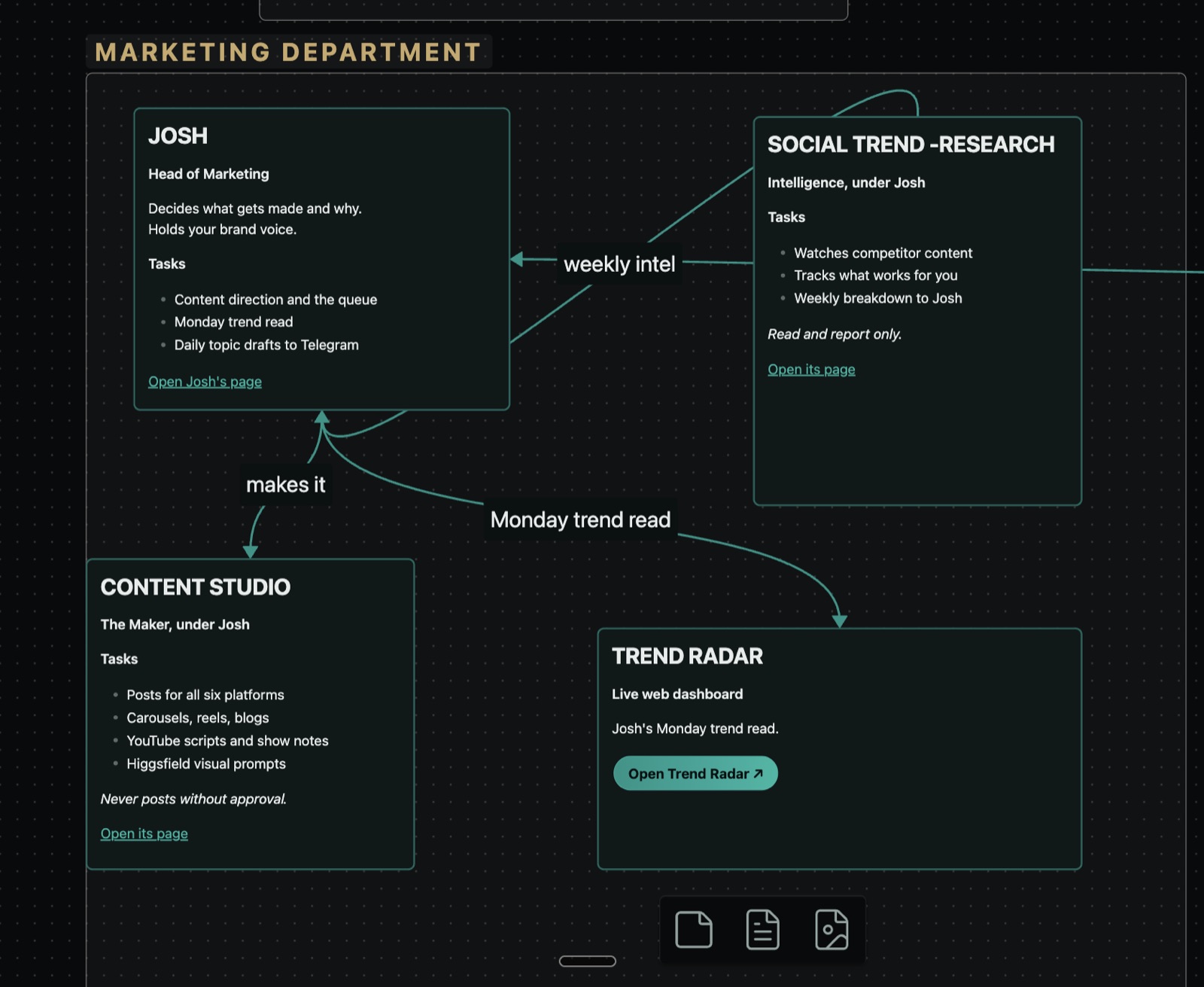
Written into the job description, not left to chance. Drafts to me, and I'm the one who sends.
If a tool writes the thing, schedules the thing, and sends it out with your name on it and you never once read it, that isn't your business talking anymore. And your best customers can feel it.
Why I'm telling you this when it costs me money
I sell AI. My income literally goes up when people use more of it, not less. So when I tell you to pull it out of the front of your business, I'm talking myself out of the easy sale. The easy sale is "let it all run itself, here's the button." Plenty of people in my industry are selling exactly that, because it sounds impressive and it lets people feel like they've paid their way out of doing the work.
When that woman told me about the email from her client, my first thought was that some of what she'd set up, she set up because of noise my own industry makes. I've said softer versions of it myself, on stages, talking about taking yourself out of the day to day. Some people hear that and take it all the way to handing over their own voice. That one stung.
The AI I actually believe in gives you your time back so you can put more of yourself into the parts that matter, not less. If it's standing in for you in front of your customers instead, something has gone wrong somewhere, and I'd rather tell you that straight even if it costs me the sale.
 Ahead of the Algorithm · Ep 12: Why you need to use less AIThe full version, including the part where I argue with myself about it. Listen on Spotify.
The audit to run this week
One thing this week, and it takes about an hour.
- 1Pull up the last two weeks. Every post, every email, the chat box replies on your site, all of it in one place where you can actually see it together.
- 2Read it back as your own best customer. The one who's known you for years. One honest question of each piece: does this sound like me, or could it have come from any business on the planet?
- 3Anything that could have come from anybody, get back involved. You don't have to bin the tool that made it. You put your own voice over the top before it goes out the door.
- 4Then flip it. Write down the admin you're still doing by hand, the chasing and the booking and the sorting, and point your AI at that instead. Take it off your face and put it on the boring jobs.
The honest bit
This won't show up in your numbers next Tuesday. Trust doesn't move that fast in either direction, and anyone promising you a spike in a fortnight from "sounding more human" is about to send you an invoice.
What you'll notice first is smaller and slower than that. Someone replies to an email instead of ignoring it. A comment that reads like a person wrote it. The rest takes months, which is exactly why it's worth starting before you can feel it going wrong.
And the question I get after this one, every single time, is "okay Julia, but which tools?" I keep a free library of the ones I actually use in my own business. Not five hundred apps to drown you, just the handful I genuinely use and rate. Use it the way we've talked about here. Machines on the boring stuff behind the scenes, you out front.
Stay ahead.
Julia
